

Hippozino casino Plinko
Introduction
I see a lot of casino players approach Plinko with the wrong expectation. At first glance, it looks almost too simple: you choose a stake, set a risk level, drop a ball, and watch it bounce through a field of pegs until it lands in a payout slot. That simplicity is exactly why Hippozino casino Plinko gets attention so quickly. It is easy to understand in seconds, yet the actual session can feel very different depending on how the settings are configured.
What makes Plinko worth a closer look is not just the visual appeal of the falling ball. The real interest comes from the gap between what the interface suggests and what the numbers imply. On screen, it looks light, fast, and intuitive. In practice, it can behave like a high-variance casino game with long quiet stretches, sudden spikes, and a rhythm that is very different from a slot machine or a table game.
In this review, I will focus strictly on the Plinko experience at Hippozino casino: how the format works, why players keep returning to it, where the tension really comes from, and what a player should understand before starting. My aim is not to oversell the game, but to explain what it actually offers and where caution matters.
What Plinko is and why it draws so much attention
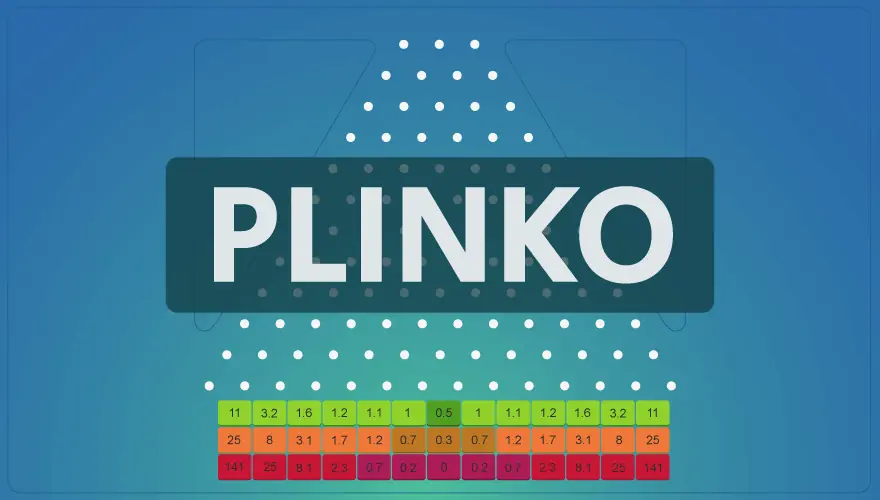
Plinko is a chance-based casino game built around a vertical board filled with pins or pegs. A ball is released from the top and changes direction each time it hits an obstacle. At the bottom, there are multiple outcome slots, each linked to a multiplier. The final slot determines the result of that round. A quick read of Hippozino Casino Gates of Olympus slot guide answers most questions about limits and account settings.
The format stands out because it compresses the whole gambling cycle into a very short visual event. There is no reel set, no payline map, no card logic to follow, and no long rulebook to learn. A player sees the ball fall, reacts to every bounce, and gets the result almost immediately. This directness is a major reason why Hippozino casino Plinko can appeal both to newcomers and to experienced users who want a faster, cleaner style of session.
Another reason the game became so visible is that it creates a strong illusion of readability. Players often feel they can “see” the result forming as the ball moves left and right. That is psychologically powerful. Even though the underlying outcome remains random, the movement gives each round a miniature narrative. In many other casino formats, the result simply appears. In Plinko, the result seems to unfold in front of you, and that changes how people emotionally process each stake.
One of the most interesting things about Plinko is this: it looks calmer than it really is. The board design feels almost playful, but depending on the risk setting, the distribution of outcomes can become quite aggressive. That contrast is one of the reasons the game remains so noticeable across modern casino platforms.
How the Plinko mechanic actually works in play
At Hippozino casino, the core structure of Plinko follows a familiar model. You place a stake, select a risk profile, and in some versions adjust the number of rows. Then the ball is dropped from the top of the board. As it hits each peg, it is deflected left or right until it reaches one of the multiplier slots at the bottom.
On the surface, the logic is straightforward. The deeper point is how the board shape influences outcome distribution. In a standard Plinko layout, central landing zones are usually more common, while the extreme edge slots tend to be harder to hit. That means the biggest multipliers often sit in the least frequent positions. The game is not just random in a general sense; it is random within a distribution that is deliberately uneven.
This matters because many players focus only on the maximum multiplier and ignore the path required to reach it. In practical terms, most rounds are naturally drawn toward the middle of the board. If the selected setup places modest returns near the centre and large returns on the edges, then the session will often produce many ordinary outcomes and only occasional standout hits.
| Element | What it does | Why it matters in a real session |
|---|---|---|
| Stake size | Sets the value of each drop | Directly affects bankroll pressure during fast play |
| Risk level | Changes the payout distribution | Can turn the same board from relatively steady to highly swing-driven |
| Rows | Influences the path length and slot spread | Often changes how concentrated or stretched the outcomes feel |
| Multiplier slots | Determine the final return | Show where small, medium, and rare high results sit on the board |
The movement of the ball creates suspense, but it should not be mistaken for a skill input. The player is not steering the drop in a meaningful way. The important decisions happen before the ball falls: stake level, risk setting, and sometimes board depth. Those choices shape the character of the session far more than the visual path itself.
Why the session rhythm feels so different from a slot
Plinko has a very specific tempo. Each round is short, clear, and self-contained. There are no bonus rounds to wait for, no scatter chase across dozens of spins, and no expanding rule set over time. You stake, drop, watch, and repeat. That loop can feel clean and satisfying, especially for players who dislike the layered structure of modern video slots.
But the speed of that loop has consequences. Because each round resolves quickly, it is easy to underestimate how many stakes are being placed over a short period. A player who would normally pause between slot spins may move much faster in Plinko because the interaction feels lighter. In reality, the bankroll can cycle just as quickly, and sometimes faster. Anyone stuck on account verification can follow the steps laid out in chicken road page for active Hippozino Casino players.
This is where Hippozino casino Plinko becomes more interesting than it first appears. The game has a low barrier to entry, but it can produce a high-intensity session without looking intense. There is no loud feature sequence required. The tension comes from repetition, from waiting for a strong multiplier to appear, and from the knowledge that edge hits are rare but possible on any drop. Anyone stuck on account verification can follow the steps laid out in casino legality checklist.
A memorable detail I have noticed with Plinko is that short losing stretches often feel longer than they are, while a single sharp hit can make the whole session seem more successful than it really was. The format compresses emotion very efficiently. That is not a flaw, but it is something players should recognise.
Risk levels, probabilities, and what they mean in practice
If there is one area players should understand before launching Plinko, it is the risk setting. This is not a cosmetic option. It fundamentally changes the way the payout model behaves. A lower-risk setup usually clusters more returns around smaller multipliers, which can make the session feel steadier. A higher-risk setup often widens the gap between common and rare outcomes, increasing the chance of long dry runs in exchange for access to larger top-end multipliers.
That trade-off is central to the Plinko experience. The game can look identical on screen while behaving very differently underneath. Two players can use the same board and leave with completely different impressions simply because one chose a moderate distribution and the other selected an aggressive one.
- Low risk: more frequent modest returns, less dramatic swings, usually a better fit for players who want to observe the game without chasing rare outcomes.
- Medium risk: a middle ground where the session can still fluctuate, but not as sharply as the most aggressive setup.
- High risk: fewer reassuring results, more empty-feeling sequences, and stronger dependence on occasional large multipliers.
Probability in Plinko should be understood as distribution, not promise. The board does not “owe” a high multiplier after a run of weaker drops. This is important because the visual nature of the game can tempt players into pattern-seeking. A ball landing near the edge several times does not mean the next one is more likely to hit the extreme slot. Each round is its own event within the programmed payout structure.
Another useful observation: the most dangerous misunderstanding in Plinko is to confuse visible motion with growing control. Because you can watch the ball bounce, it is easy to feel more involved in the outcome than you really are. That feeling can make chasing losses seem more rational than it is.
Who Plinko suits and where it can become uncomfortable
Plinko tends to suit players who value immediacy. If someone enjoys short rounds, clean visuals, and a format that does not require learning paytables or special symbol chains, this style can be a very natural fit. It also works well for users who like adjusting one or two core parameters and seeing how the session changes as a result.
It may also appeal to players who enjoy probability-driven games overview more than story-driven ones. Plinko does not pretend to be a cinematic experience. It is closer to a controlled randomness model with a visual shell. For some players, that honesty is a strength.
At the same time, the game is not ideal for everyone. Players who prefer layered entertainment, bonus rounds, themes, soundtrack progression, or feature anticipation may find Plinko too bare after the novelty wears off. If someone enjoys classic slots because of symbol combinations, free spins, and feature reveals, Plinko can feel almost stripped down. To understand the wagering rules behind each offer, open Hippozino Casino withdrawal limits for real money players next.
It can also be a poor fit for players who react strongly to streaks. On higher settings especially, the session may contain many outcomes that feel underwhelming before a strong result appears. If a player needs frequent reinforcement to stay comfortable, Plinko may become frustrating rather quickly.
What to understand about outcome patterns before you start
One of the most practical things a player can do before using Hippozino casino Plinko is to stop thinking in terms of single drops and start thinking in terms of session shape. The game is built around repeated attempts, and the distribution of results only starts to make emotional sense over a sequence rather than one isolated round.
That means three things matter immediately:
- Session length: a short session may never reach the kind of hit the player had in mind.
- Stake discipline: fast rounds can make overbetting feel harmless until the balance moves sharply.
- Expectation control: the top multiplier is part of the attraction, but not a realistic baseline for planning a session.
I would also stress that Plinko often produces a misleading first impression. In the opening minutes, it can feel either friendlier or harsher than it really is, depending on how the first cluster of drops lands. Because the game is so fast, early variance can shape a player’s mood disproportionately. This is one reason a demo version, where available, is genuinely useful here. Not because it predicts future results, but because it helps the player understand the rhythm without immediate bankroll pressure.
How Plinko differs from slots and other casino formats
The easiest comparison is with online slots, but the differences are more significant than many players assume. A slot machine hides most of its maths behind reels, symbols, and bonus triggers. Plinko exposes the drama more directly. You see the path, the board, and the final slot. That transparency changes the emotional texture of play, even though both formats are still driven by chance.
Compared with slots, Plinko usually offers:
- faster and cleaner round resolution,
- less thematic content,
- more obvious dependence on distribution settings,
- a stronger focus on repeated micro-events rather than feature cycles.
Compared with roulette, Plinko shares the attraction of simple rules and visible randomness, but the presentation is more animated and the payout spread can feel more layered because of the board structure. Compared with crash-style games, Plinko is less about timing decisions and more about accepting a pre-shaped outcome curve. Compared with blackjack or baccarat, it removes strategic participation almost entirely.
| Format | Main player appeal | How Plinko differs |
|---|---|---|
| Classic slots | Features, symbols, bonus rounds | Plinko is more stripped back and outcome-focused |
| Roulette | Simple betting logic and quick results | Plinko adds visual descent and configurable risk distribution |
| Crash games | Cash-out timing and pressure | Plinko removes timing skill and centres everything on board outcomes |
| Blackjack | Decision-making and table strategy | Plinko is far more passive once the drop begins |
In short, Plinko sits in an unusual middle ground. It is simpler than most slots to read, but often harsher than it looks when variance is raised. That mix is a major part of its identity.
Practical strengths and weaker points of the format
The strongest quality of Hippozino casino Plinko is clarity. The player understands the round instantly. There is very little friction between opening the game and knowing what is happening. For many users, especially those tired of overloaded slot interfaces, that is a real advantage.
Another strength is adjustable personality. By changing risk level, and in some versions rows, the player can make the same game feel more measured or more explosive. This gives the format more flexibility than its simple appearance suggests.
The third strength is emotional efficiency. Every drop creates a compact moment of suspense. There is no need to wait through long reel animations or feature build-up. If the player wants a quick, direct casino session, Plinko delivers that very well.
The weaker side is depth. Once the player understands the board, there are fewer layers to discover than in a feature-rich slot. The game can become repetitive for people who need evolving structure. Another limitation is that the visual movement may soften the perception of how swing-heavy the session really is. That can lead to poor stake decisions if the player treats it as a harmless low-pressure diversion.
There is also a subtle downside in how success is remembered. Because rare high multipliers are so visually satisfying, players may mentally overvalue them and undercount the cost of reaching them. This is not unique to Plinko, but the format makes that bias especially easy to feel.
What I would check before launching Hippozino casino Plinko
Before starting a real-money session, I would look at a few practical details rather than jumping straight into repeated drops.
- Risk setting: understand whether you are entering a steadier session or a sharp variance model.
- Stake size relative to speed: a bet that seems small can add up quickly in a fast cycle.
- Board options: if row count is adjustable, recognise that this can alter how stretched the payout map feels.
- Top multiplier expectations: treat headline numbers as rare possibilities, not as a session target.
- Personal tolerance for repetition: if you need feature variety, Plinko may feel thin after the first excitement fades.
If a player is unsure, a cautious approach makes sense. Start with a lower stake, test the pacing, and pay attention to how the session actually feels rather than how the board looks. In Plinko, that distinction matters more than many expect.
Final verdict
Hippozino casino Plinko offers a casino experience built on simplicity, speed, and visible randomness. Its main strength is that it explains itself immediately while still leaving room for meaningful variation through risk settings and board configuration. That makes it accessible on the surface, but not necessarily gentle in practice.
What the game really offers is a compact cycle of tension and release. You are not coming here for story, feature depth, or strategic control. You are coming for quick rounds, clear outcomes, and a format where the distribution of results matters more than decorative presentation. For the right player, that is exactly the appeal.
The strongest parts of Plinko are its clarity, adjustable tempo, and the very direct way it turns each drop into a small suspense event. The areas where caution is needed are just as clear: higher settings can produce sharp swings, the pace can accelerate spend faster than expected, and the visual path of the ball can create a misleading sense of involvement. Those comparing loyalty perks can weigh this section against top Hippozino Casino crash games.
I would say Plinko suits players who enjoy stripped-back chance games and who are comfortable with sessions shaped by variance rather than feature progression. It is less suitable for those who want rich slot-style entertainment or who become impatient during uneven result sequences. In other words, Plinko is not universally appealing, but it is very effective at what it is designed to do. If you understand that before you start, the experience at Hippozino casino is much easier to judge on its real merits.
FAQ
How does Hippozino Plinko work when a ball drops?
A ball is released from the top and falls through a grid of pegs. Each contact changes the ball path until it lands in a score slot with a multiplier. Outcomes are determined per play, so results can vary from round to round.
What should be checked before the first click to avoid confusion with Plinko rules?
Confirm the selected mode is either demo or real-money play, since the experience and balance behave differently. Check the stake or bet amount shown near the play controls before launching the first ball. Also note the risk level display if the game interface offers it.
Why can the ball land in different multipliers even if the same stake is used?
Plinko relies on chance as the ball bounces across the peg grid. Even with the same stake, the exact path can differ, leading to different landing slots. The game’s volatility indicator, if present, can also suggest the spread of results.
If a login is required before playing Plinko, which account step is usually needed?
Sign in to the account to enable real-money play and ensure the stake is linked to the cashier. If access is restricted, completing registration or verifying details may be required before the game starts. After logging in, refresh the game lobby and relaunch the Plinko table.
What to do if the Plinko page does not load a working table or shows an error?
Try switching between demo and real-money mode to confirm the table loads correctly. Clear browser cache or restart the mobile browser session, then return to the game lobby. If the problem continues, contact support and mention the exact time and device used.
What action starts a Plinko round without delays?
Release the ball from the play controls and confirm the stake for the round.
Can a pending withdrawal affect real-money Plinko play?
A pending withdrawal can impact how quickly the account balance updates, which may affect available funds for new stakes. If the cashier shows limited availability, hold off on starting real-money rounds until the withdrawal status changes. For exact handling, the cashier and transaction details on the account provide the latest status.